What Happens in a Physical Therapy Evaluation in Tomball?
Whether you are a competitive runner managing a stubborn overuse injury, an athlete working toward a return to sport, or someone simply trying to move without pain, the idea of a physical therapy evaluation can feel uncertain. What will they actually do? How long does it take? Will it hurt?
A great evaluation does far more than identify where it hurts. It maps out exactly why you are hurt, what is holding you back, and what it will take to get you performing at your best again. At Dynamic Sports Therapy in Tomball, TX, your evaluation is the foundation of everything that follows.
In Texas, you do not need a doctor's referral to get started. You can walk in, get evaluated, and begin treatment the same day.
Your Story, Our Starting Line
Every effective recovery starts with context. Before any hands-on work begins, your physical therapist will take the time to understand your complete picture. That means your injury history, your training schedule, your sport or activity, your goals, and how your current condition is affecting your performance and daily life.
This is not a generic intake form exercise. The team at Dynamic Sports Therapy wants to know what matters most to you, whether that is returning to running pain-free, getting back on the field for your season, or rebuilding strength after surgery. Clear goals from the start allow your therapist to build a plan that is aligned with where you want to go.
The Comprehensive Physical Assessment
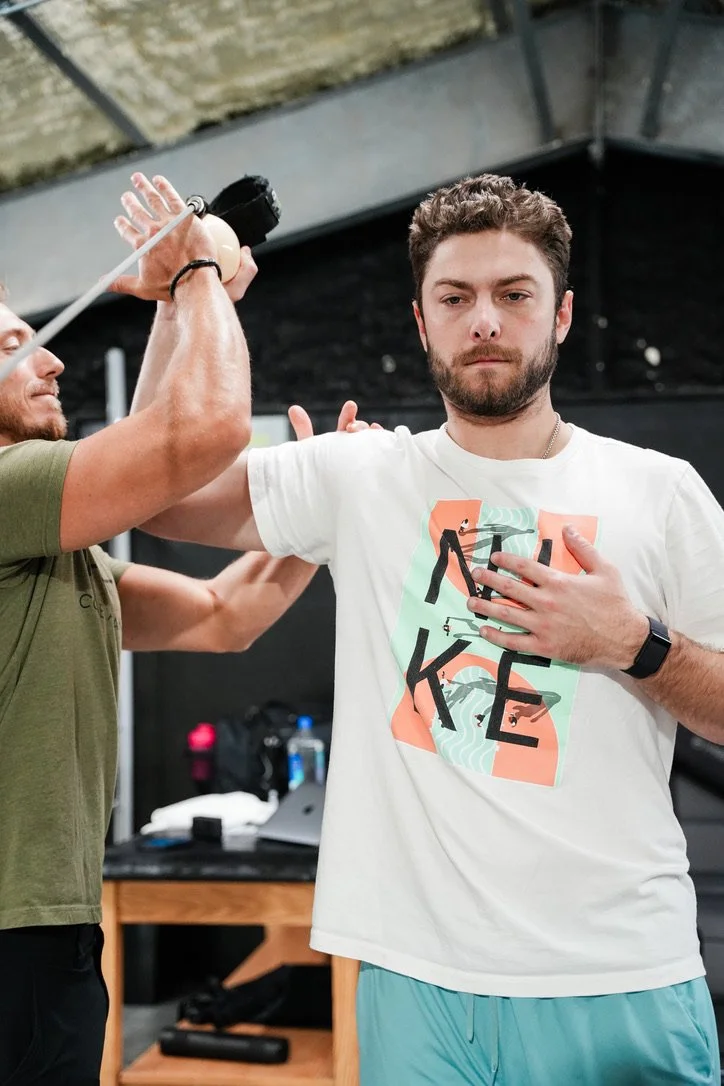
Once your history is established, the physical examination begins. This is where your therapist identifies the root cause of your pain or limitation, not just the surface-level symptoms.
Movement Analysis and Biomechanical Screening
Your therapist will observe how you move, assessing posture, gait, and sport-specific movement patterns to identify compensations, asymmetries, and mechanical inefficiencies. A functional movement assessment is used to build a complete picture of how your body is performing under load and through range of motion.
For runners, this evaluation can include a running gait analysis and running form assessment, which breaks down every phase of your stride with a level of precision that supports both injury recovery and long-term performance development.
Strength, Flexibility, and Range of Motion Testing
Manual muscle testing, joint range of motion measurements, and tissue flexibility assessments give your therapist a detailed snapshot of what your body can and cannot do right now. These findings directly shape your treatment priorities and help establish a baseline for tracking progress.
Hands-On and Neurological Examination
Your therapist will assess nerve function, reflexes, and sensation where relevant, and use skilled palpation to locate specific areas of pain, inflammation, or soft tissue restriction. Conditions ranging from low back pain and sciaticato rotator cuff injuries, IT band syndrome, and Achilles tendinopathy all require this level of thorough, hands-on examination to guide accurate treatment.
Advanced Testing at Dynamic Sports Therapy
At Dynamic Sports Therapy, your evaluation goes beyond what many clinics offer. Objective, data-driven testing gives your therapist precise information to guide every clinical decision.
Force plate testing measures ground reaction forces, power output, and limb symmetry, which is critical for athletes recovering from lower extremity injuries such as ACL injuries, ankle sprains, or meniscus injuries.
Isokinetic and dynamometer testing delivers precise measurements of muscle strength and endurance at specific joint angles, pinpointing exact deficits and tracking progress with real numbers.
Running gait analysis provides a complete biomechanical profile that supports recovery from conditions like runner's knee, plantar fasciitis, shin splints, and hamstring strains.
Return-to-sport testing ensures athletes are cleared using objective benchmarks, not guesswork, before returning to full activity.
This standard of testing supports athletes at every level, from those recovering from their first injury to those preparing for competitive return.
Your Personalized Treatment Plan
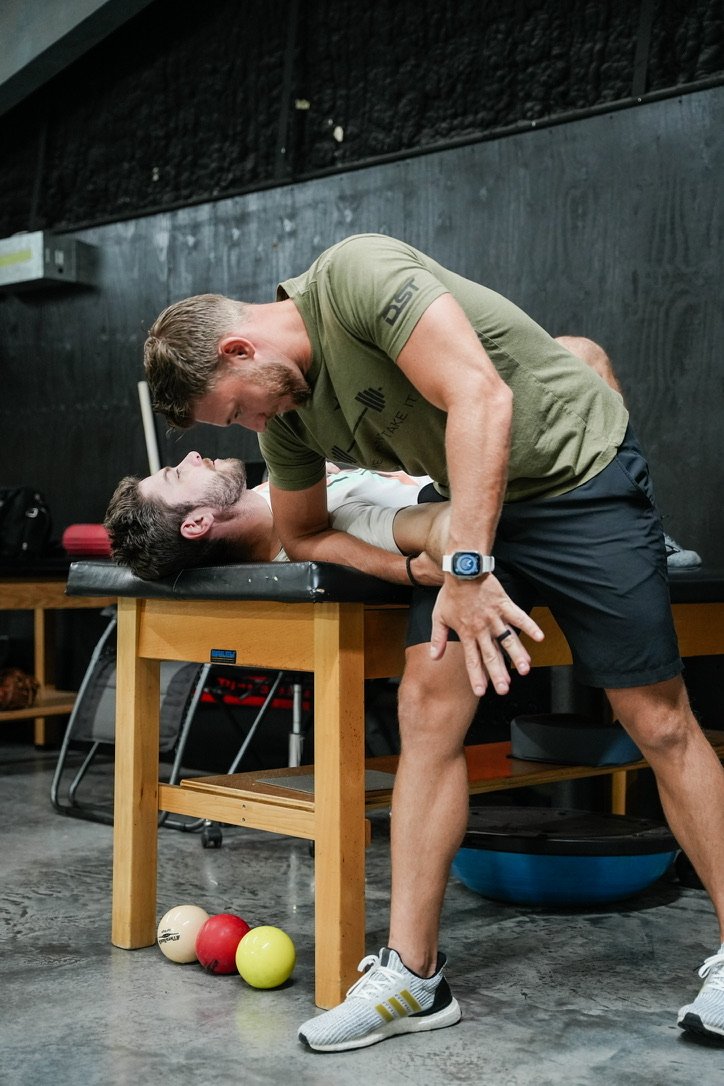
Once your evaluation is complete, your therapist will walk you through their findings and present a clear, individualized treatment plan. This plan is built around your goals, your sport or activity, and your timeline.
Depending on what the evaluation reveals, your plan may incorporate:
Manual therapy techniques includingdry needling, cupping, myofascial release, soft tissue mobilization, and joint mobilization
Blood flow restriction (BFR) training and neuromuscular re-education to rebuild strength efficiently
Therapeutic exercise, plyometrics, and sport-specific return-to-sport progressions to restore full function
Assisted stretching, compression therapy, and electrical stimulation to support recovery between sessions
Strength and conditioning programming to address deficits and build resilience beyond the injury itself
The goal is never just to reduce pain. It is to return you to full performance and make you more durable than you were before the injury.
Why Dynamic Sports Therapy in Tomball
Dynamic Sports Therapy brings a performance-first philosophy to every patient, combining orthopedic physical therapy, sports physical therapy, manual therapy, and performance training under one roof. Whether you are working through a labral tear, shoulder impingement, tennis elbow, or a hip impingement, the same level of clinical rigor and individualized attention applies.
This approach supports athletes and active individuals across all stages, from prehabilitation and injury prevention to post-surgery rehabilitation and return to sport.
Ready to Get Started?
You do not have to stay stuck, guess at what is wrong, or wait on a referral. Dynamic Sports Therapy in Tomball is ready to give you the answers and the plan you need to get back to doing what you love. Schedule your physical therapy evaluation today and take the first step toward performing stronger than ever.